
Imagery and data, one mesh
Imagery and telemetry share the same mesh link, and in a star topology one link carries several aircraft — a single operator position holds the whole fleet, with no separate link per airframe.
Imagery and telemetry share the same mesh link, and in a star topology one link carries several aircraft — a single operator position holds the whole fleet, with no separate link per airframe.
The link hops continuously to stay clear of interference, and lost packets are retransmitted without operator input. High volume, long range, and still steady — no dropped frames, no queue of stale commands.
A proprietary protocol on top of channel encryption: the link does not interoperate with off-the-shelf gear and is hard to intercept or inject into. Security is designed in, not patched on.
One aircraft relays for another: the lead leaves coverage and the aircraft behind hands the link on, extending reach to 300 km. Beyond the ridge or out at sea, the picture still arrives.
Where a ground network is available, roaming mode chains base stations together and hands over between them, so a long fixed route extends segment by segment — coverage as long as the route.
The aircraft launches at A and lands at B; the system reads signal strength and hands control to the next station on its own, so the crew never has to chase it down the route.
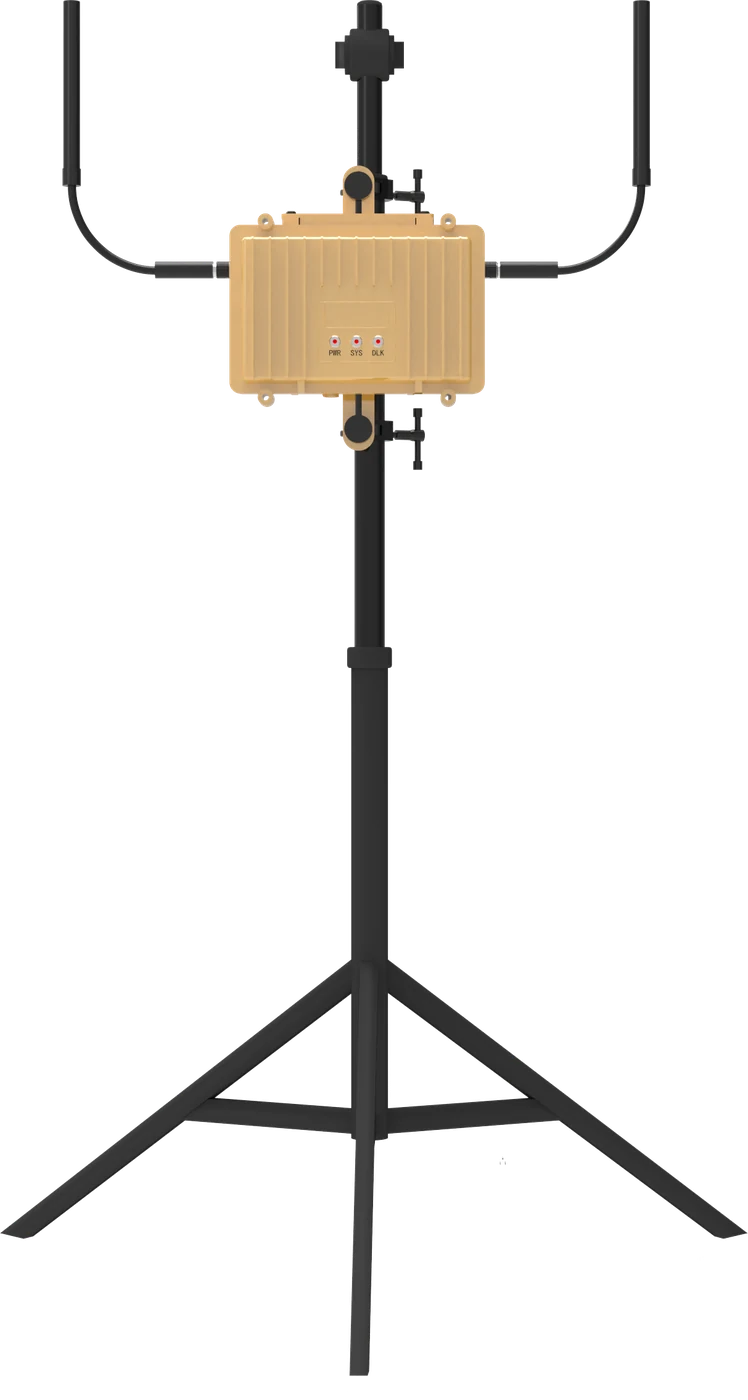
Battery-powered mesh node on a tripod. Sets up in minutes where there is no vehicle access, and extends the link 50 km.
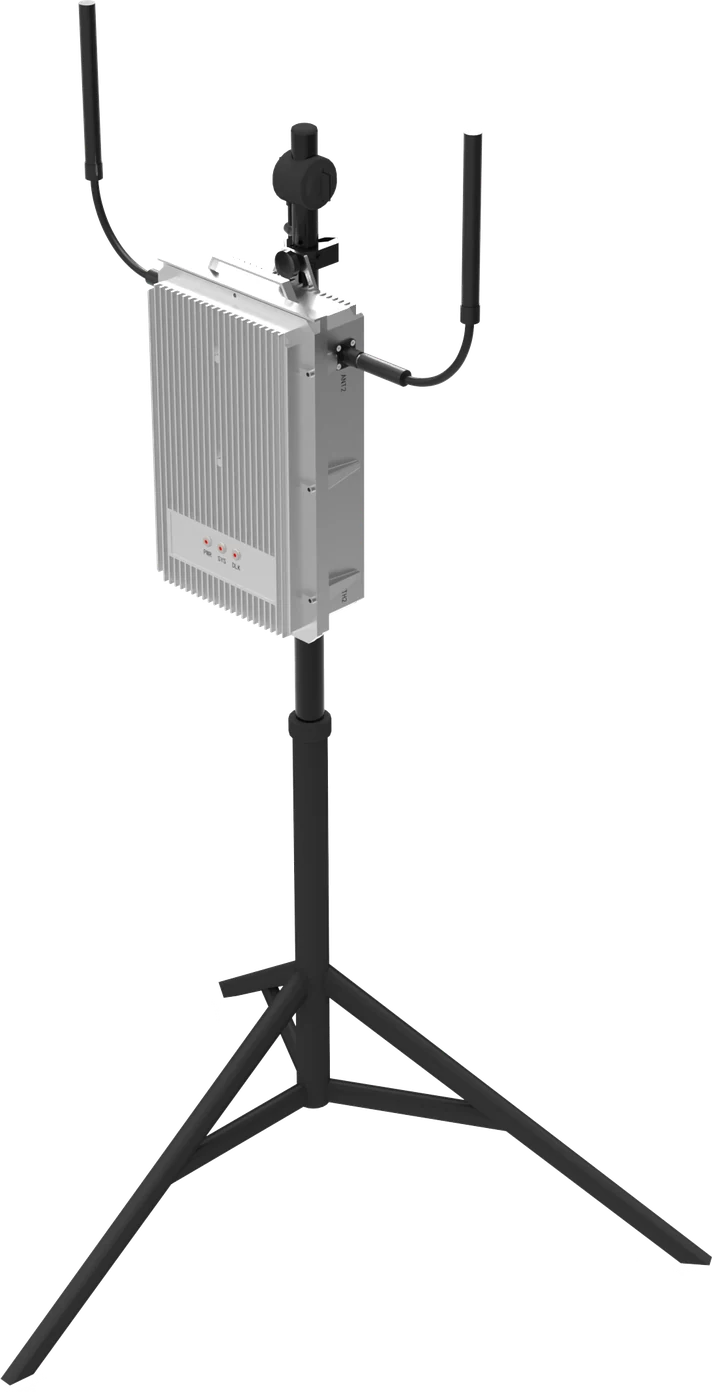
The same node with a hybrid power supply and 10 W per channel — twice the reach of the M02 for a station that stays out for days.
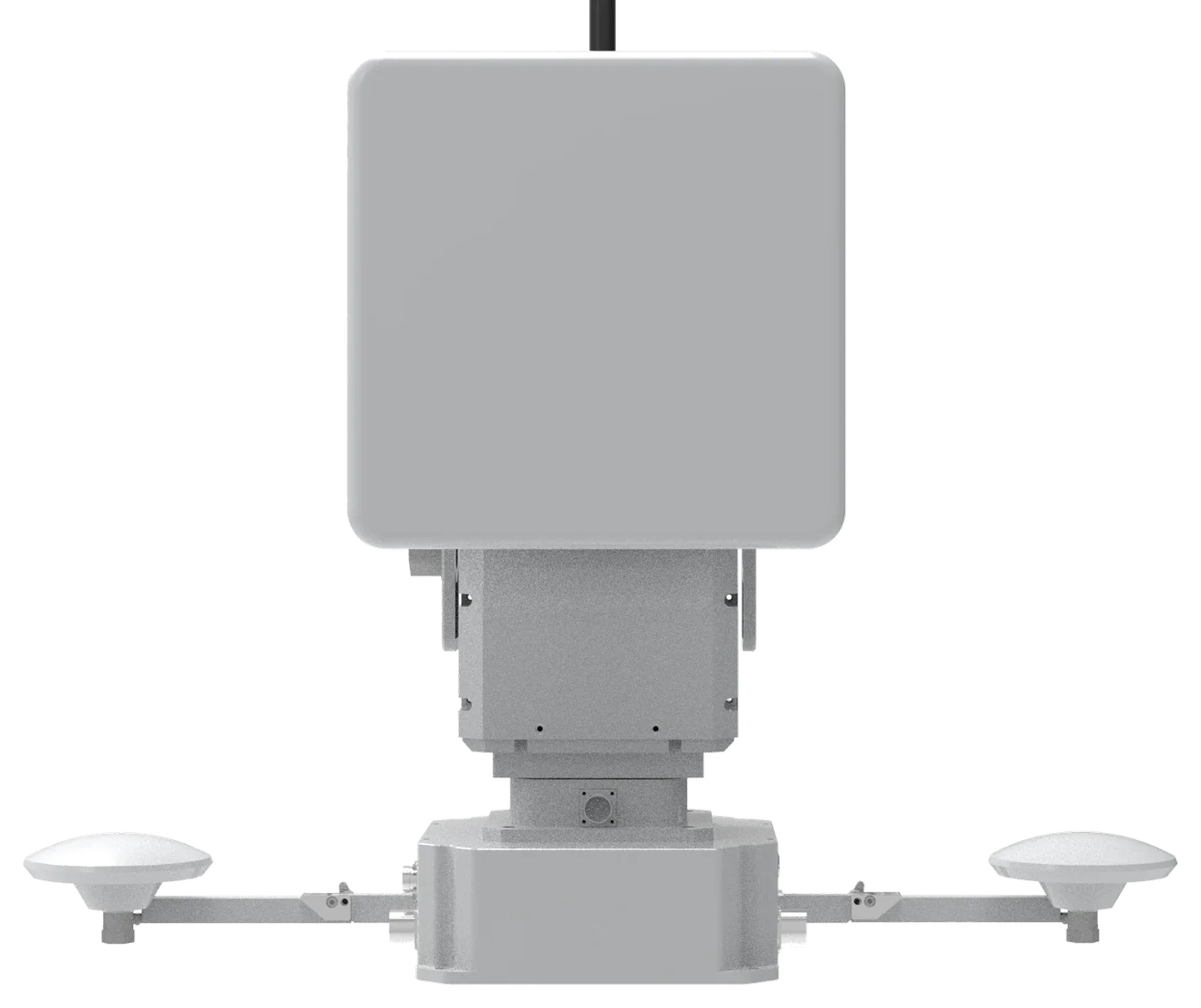
Auto-tracking antenna that keeps the link on a moving aircraft at 150 km, hands off between aircraft and holds the beam without an operator.